Studio

The Poetry of Change

"I capture the poetry of change. Light is the language I use to tell that story. Without light, porcelain would stay mute and light would be only decoration. I ‘write’ Chronicles, telling the tale of time. And time is change—forever held in fine porcelain."
Behind Porcelain Chronicles lies the artistic vision of capturing the fleeting within the enduring. My central theme is the poetry of change, which I make tangible through the medium of light within porcelain. I utilize the unique translucency of this material to explore the thresholds between the tangible and the intangible—where matter begins to glow, and moments of becoming and passing linger for a heartbeat.
Porcelain is my medium—the "supreme discipline" of ceramics. It is in its interaction with light that porcelain reveals its true magic: it allows photons to penetrate deep into its mineral structure before releasing them as a soft, diffuse glow. I strive to make this unique translucency felt as a room-filling radiance—an eternal play of light, color, and shadow.
While high-fired porcelain becomes one of the hardest materials on earth, its paper-thin translucency renders it fragile. This material bridges the gap between the physical and the ephemeral. My objects serve as "archives of light,"preserving the essence of the moment.
Porcelain is clay-earth; thus, my thicker-walled singular pieces appear stable and "grounded." Glazes and glass flow over these large-scale objects as a tactile invitation to experience their surfaces. Sunlight intensely reflects off the colors, structures, droplets, and fine fissures, serving as a reminder of the processes of change—for history, and stories, require light to be read.
My formal language is organic; I seek shapes that capture the momentary nature of natural processes—forms that speak of growth and decay. Like chroniclers, my porcelain objects immortalize specific moments of being within their folds, surfaces, or droplets of glaze. Over the years, my academic background as a historian has merged with my ceramic practice: my sculptures and installations seek the permanent within the fleeting, honoring the archaic past in the here and now.
The creation of each work is defined by high complexity, as I experimentally test the physicochemical boundaries of porcelain, paperclay, glaze, and mixed media. The final transformation occurs during the firing process at temperatures up to 1280 °C. It is here that the "soul" of the piece emerges—born from controlled chance—to touch the viewer. It is a quest for perfection that welcomes the unexpected, where intuition meets fifteen years of experience as a self-taught artist. From the traditions of the craft, I have learned that "porcelain forgives no haste." Therefore, the joy of experimentation, patience, and the acceptance of intentional loss are fundamental to my artistic journey. After years of private experimentation and material research, I made the conscious decision in 2023 to bring this dialogue to the public. Each work is a story of risk and discovery—a chapter in an ongoing chronicle: Porcelain Chronicles.
I invite you to experience this magic in person through a dialogue with the objects, or to collaborate with me in developing a vision curated exclusively for your context.
Porcelain is my medium—the "supreme discipline" of ceramics. It is in its interaction with light that porcelain reveals its true magic: it allows photons to penetrate deep into its mineral structure before releasing them as a soft, diffuse glow. I strive to make this unique translucency felt as a room-filling radiance—an eternal play of light, color, and shadow.
While high-fired porcelain becomes one of the hardest materials on earth, its paper-thin translucency renders it fragile. This material bridges the gap between the physical and the ephemeral. My objects serve as "archives of light,"preserving the essence of the moment.
Porcelain is clay-earth; thus, my thicker-walled singular pieces appear stable and "grounded." Glazes and glass flow over these large-scale objects as a tactile invitation to experience their surfaces. Sunlight intensely reflects off the colors, structures, droplets, and fine fissures, serving as a reminder of the processes of change—for history, and stories, require light to be read.
My formal language is organic; I seek shapes that capture the momentary nature of natural processes—forms that speak of growth and decay. Like chroniclers, my porcelain objects immortalize specific moments of being within their folds, surfaces, or droplets of glaze. Over the years, my academic background as a historian has merged with my ceramic practice: my sculptures and installations seek the permanent within the fleeting, honoring the archaic past in the here and now.
The creation of each work is defined by high complexity, as I experimentally test the physicochemical boundaries of porcelain, paperclay, glaze, and mixed media. The final transformation occurs during the firing process at temperatures up to 1280 °C. It is here that the "soul" of the piece emerges—born from controlled chance—to touch the viewer. It is a quest for perfection that welcomes the unexpected, where intuition meets fifteen years of experience as a self-taught artist. From the traditions of the craft, I have learned that "porcelain forgives no haste." Therefore, the joy of experimentation, patience, and the acceptance of intentional loss are fundamental to my artistic journey. After years of private experimentation and material research, I made the conscious decision in 2023 to bring this dialogue to the public. Each work is a story of risk and discovery—a chapter in an ongoing chronicle: Porcelain Chronicles.
I invite you to experience this magic in person through a dialogue with the objects, or to collaborate with me in developing a vision curated exclusively for your context.
Resource Aesthetics

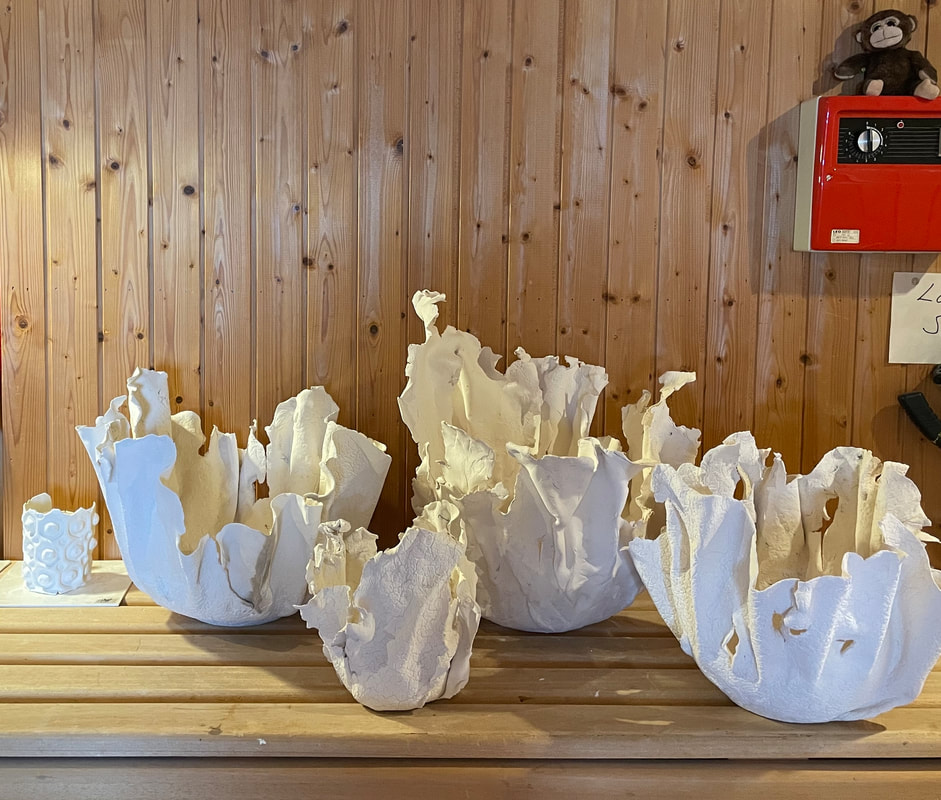
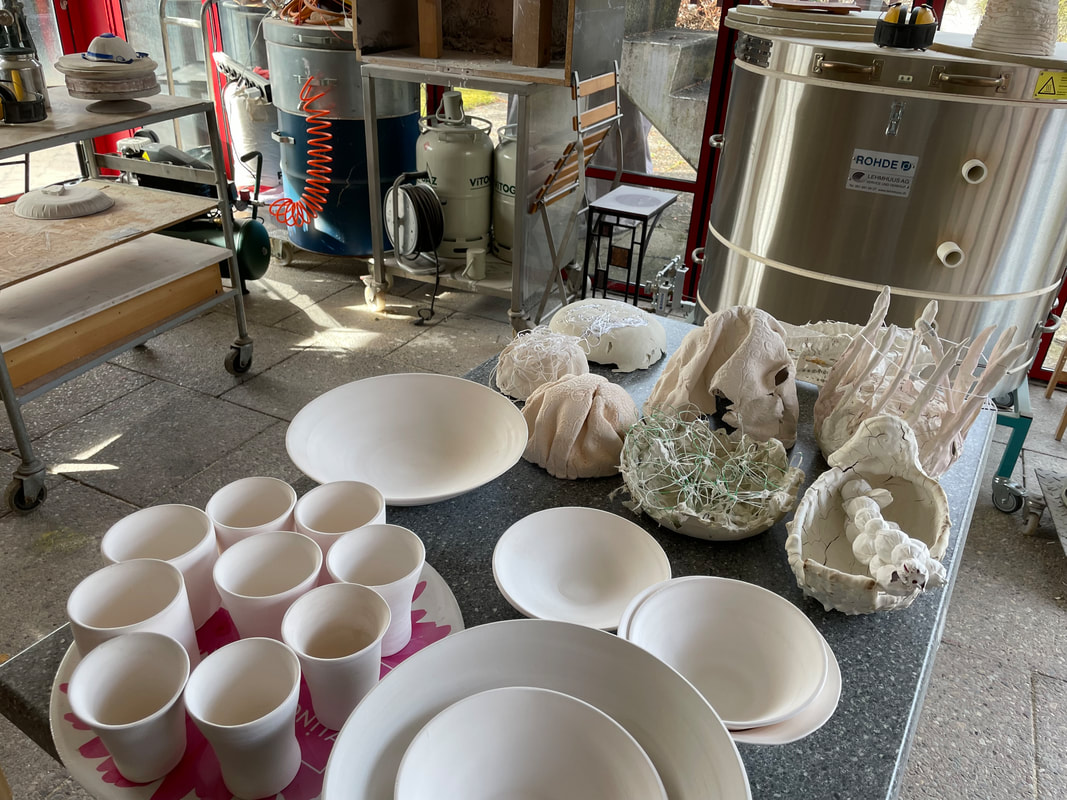
For me, Resource Aesthetics means honoring the energy of the fire and the preciousness of the porcelain. Every remnant, every shard, and every batch of glaze is a promise of a new story.
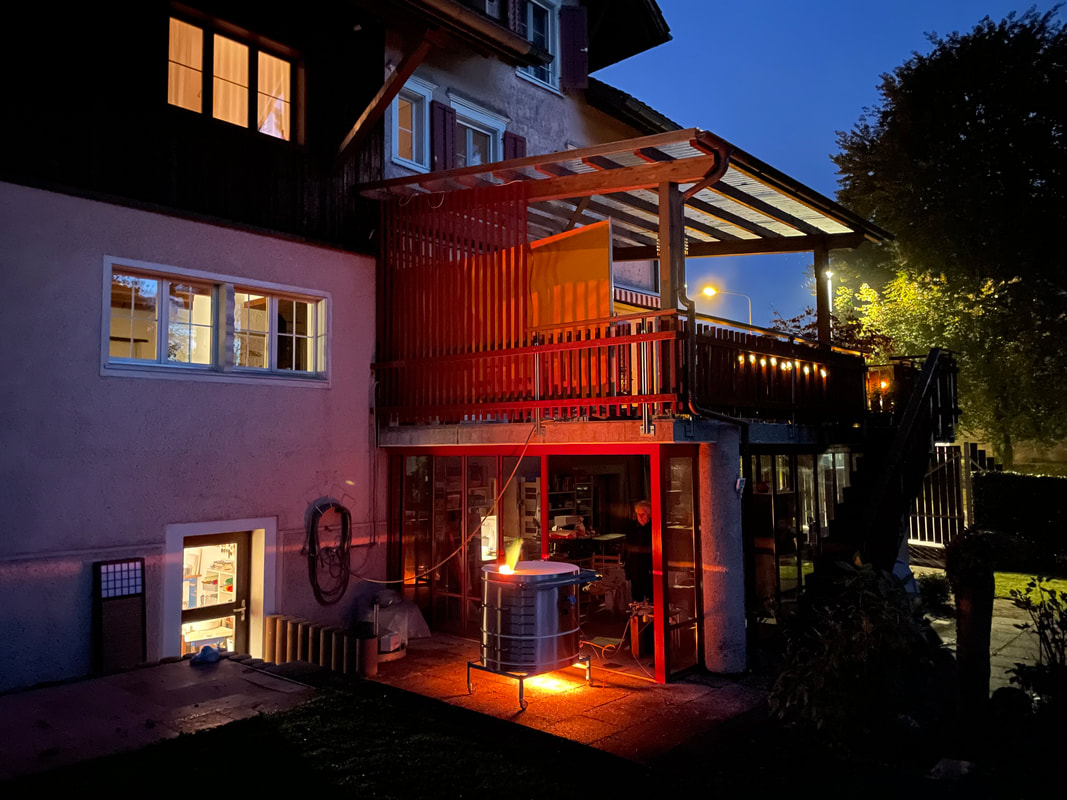
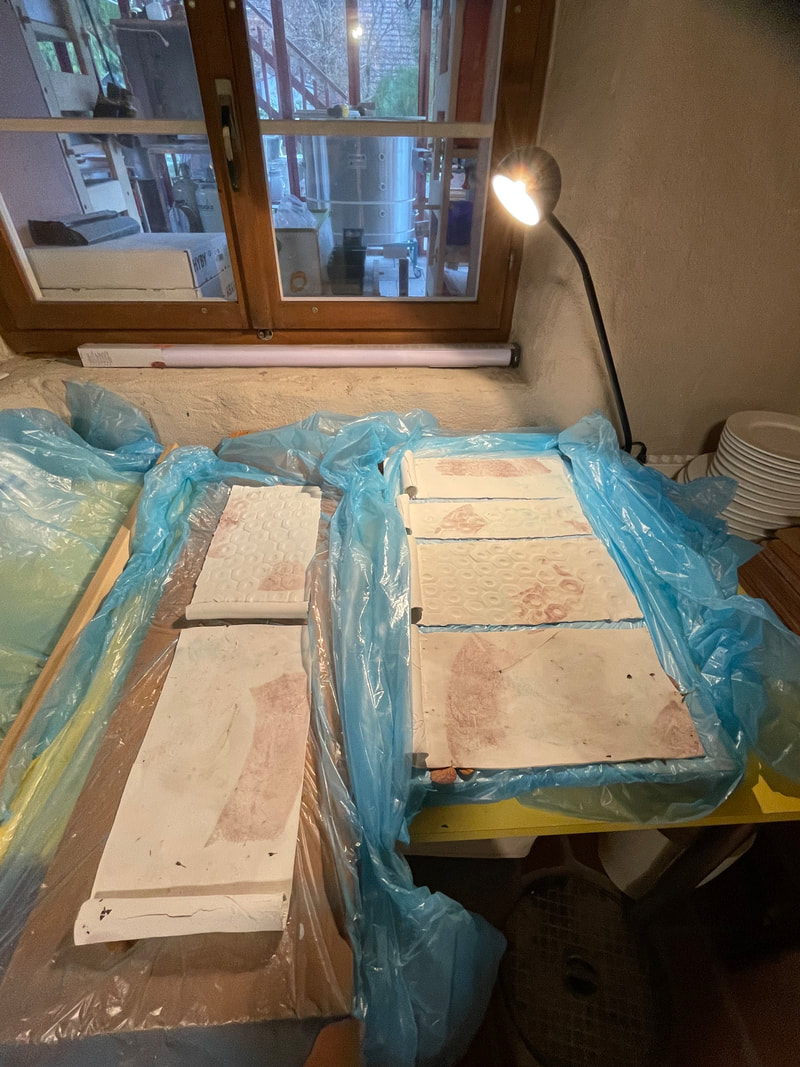
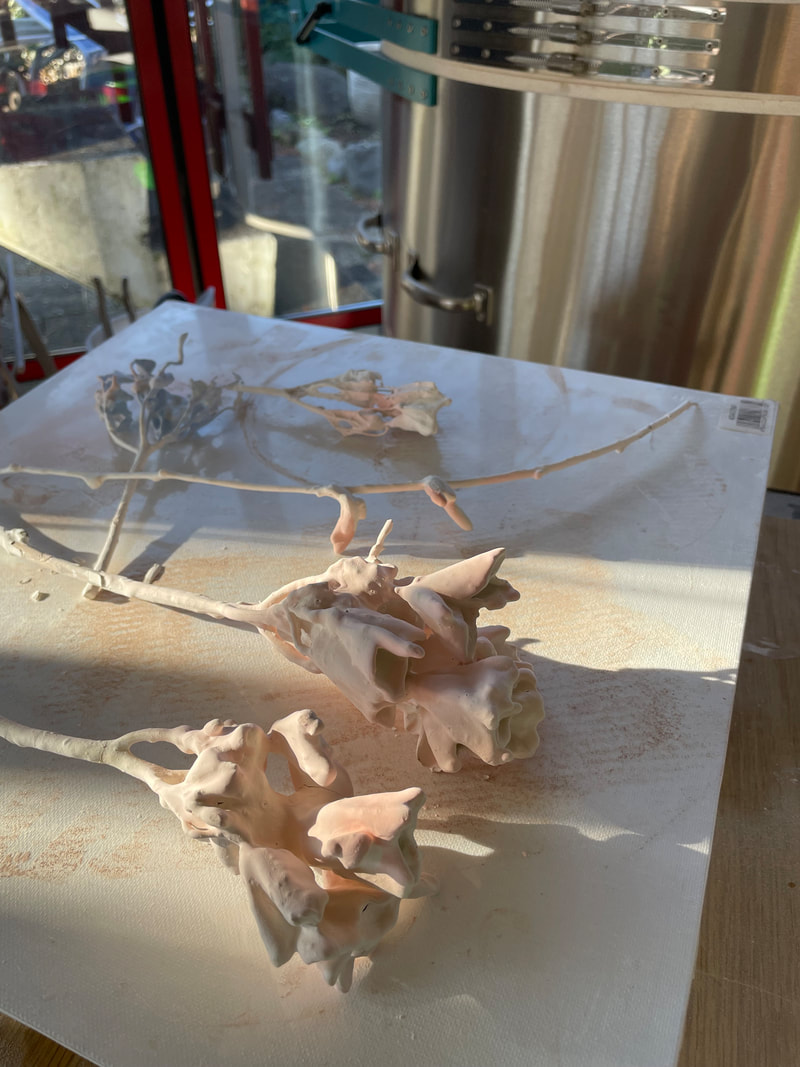
My ceramic kilns are operated using green electricity and gas, and I maximize efficiency by precisely positioning my works to utilize the full kiln capacity. For years, I have used proven, high-quality clays from England – a conscious decision for constant quality and substance. Porcelain remnants from the forming process are carefully reclaimed and reused as slip for my most delicate pieces, such as the interior elements of my light sculptures.
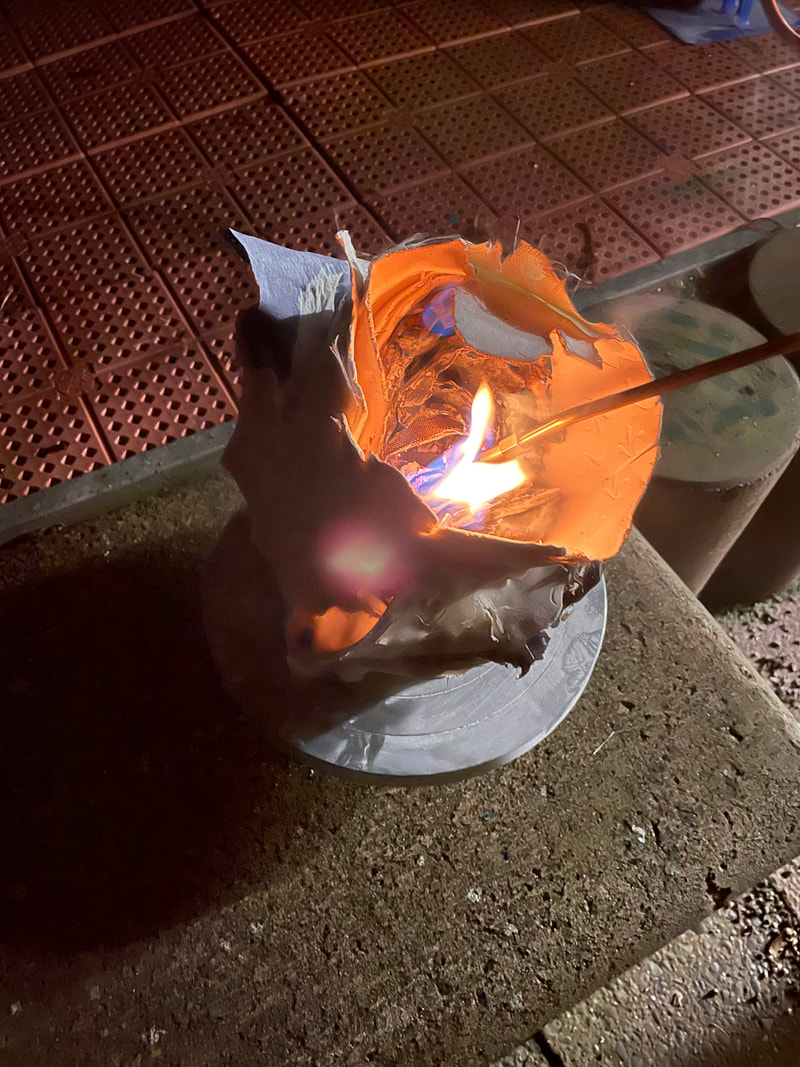
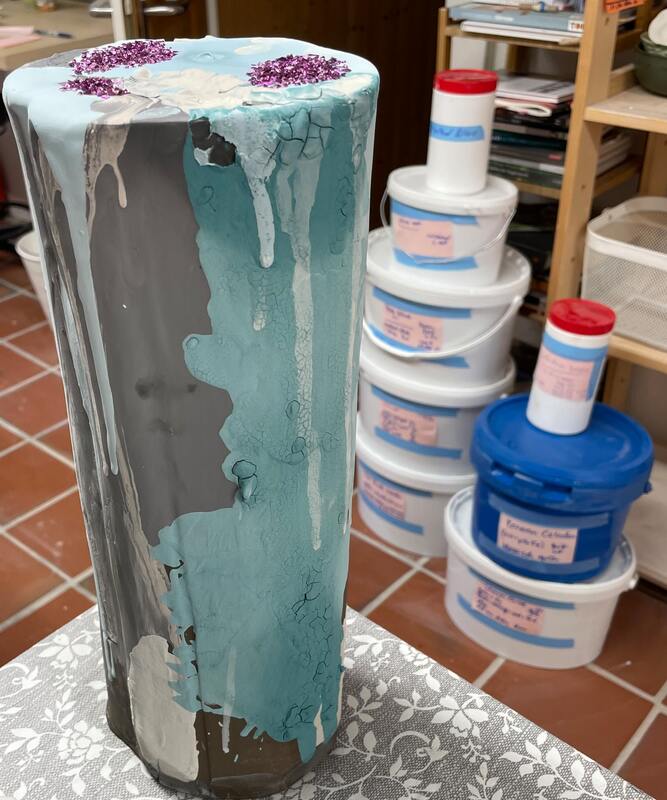
My glaze landscapes are created using my own recipes as well as glazes from the Zurich-based manufactory ROK, located just a few kilometers from my studio. A fascinating part of my work is the artistic transformation of Glaze Waste – I take over glaze batches intended for disposal, rework them, and give them a new, brilliant purpose.
Should an object be damaged during the process or in use, I follow the ancient Japanese tradition
of Kintsugi. In this practice, fractures are not concealed but refined with lacquer and gold dust. These scars become part of the work's identity. In the spirit of Porcelain Chronicles, the object is given a new life – becoming richer by one story, one chapter.
My ceramic kilns are operated using green electricity and gas, and I maximize efficiency by precisely positioning my works to utilize the full kiln capacity. For years, I have used proven, high-quality clays from England – a conscious decision for constant quality and substance. Porcelain remnants from the forming process are carefully reclaimed and reused as slip for my most delicate pieces, such as the interior elements of my light sculptures.
My glaze landscapes are created using my own recipes as well as glazes from the Zurich-based manufactory ROK, located just a few kilometers from my studio. A fascinating part of my work is the artistic transformation of Glaze Waste – I take over glaze batches intended for disposal, rework them, and give them a new, brilliant purpose.
Should an object be damaged during the process or in use, I follow the ancient Japanese tradition
of Kintsugi. In this practice, fractures are not concealed but refined with lacquer and gold dust. These scars become part of the work's identity. In the spirit of Porcelain Chronicles, the object is given a new life – becoming richer by one story, one chapter.
The Vocabulary of Form

. |
Material & Philosophy |
. |
Porcelain |
The "master discipline" of ceramics. A demanding, mineral-based precious material characterized by purity and strength. In my work, it serves as a medium to make the intangible – light – palpable. |
|
Translucency |
The hidden luminescence of porcelain. When the material is formed to its physical limits, it loses its weight and begins to absorb light, releasing it softly. For me, this light permeability is the moment when matter transforms into a light sculpture. |
|
Sculpture |
A work that does not merely occupy space but defines it. My sculptures dissolve the boundaries between pure aesthetics and subtle function – they are haptic presences that tell a story. |
|
Solitaries |
A solitary is an object of silence and concentration. Like a polished gemstone, it claims its space alone. In my work, these are unique pieces that form their own center through texture and stature, radiating a sculptural tranquility as unmistakable accents. |
|
Free Form |
Nature knows no ruler. My free forms are guided by organic processes – flowing water, polished pebbles, or the growth of lichen. This departure from industrial norms allows the material to develop its own dynamics, turning each piece into a haptic experience beyond symmetry. |
|
Serendipity |
The poetry of the unexpected. It describes the creative moment where technical mastery yields to the soul of the material, allowing for unique results that cannot be forced – a core element of the Porcelain Chronicles. |
|
Wabi-Sabi |
Wabi-Sabi is a traditional Japanese aesthetic centered on finding beauty within imperfection, transience, and the natural cycle of growth and decay. Rather than seeking flawed perfection, it celebrates authenticity by valuing weathered textures, asymmetry, and the modest elegance of objects that show the passage of time. |
|
Kintsugi |
The ancient Japanese art of healing fractures with gold. Instead of hiding flaws, they are celebrated as a precious part of an object's life story. It is the completion of beauty through the acceptance of the imperfect. |
. |
The Edition: Light Objects |
|
Astris |
(from Lat. astrum – star/celestial body) Filigree, multi-part light bodies that carry a spherical tranquility into the room like distant constellations. A hanging installation. |
|
Fuocola |
(derived from Ital. fuoco – fire) Smaller, freestanding light objects that capture the warmth and flickering life of glowing embers, shining with a gentle translucency as a tribute to natural phenomena. |
|
Mareo |
(inspired by mare – the sea) Larger, freestanding light sculptures that capture the mysteries of the ocean in porcelain. Coral- and shell-like textures evoke the profound depths of the sea. |
|
Gemmali |
(from Ital. gemma – gemstone/bud) Ground-level light sculptures, appearing as a solitary centerpiece or a complete composition, for both interior and exterior spaces. A promising glow, like that of a mysterious gemstone, defines the atmosphere of the space. |
|
Lumago |
(a symbiosis of lumen – light and imago – image/shape) Wall and light objects that, as luminous visions, transform the wall into a canvas of translucency and emotion. |
|
Talismane |
Personal protective charms and lucky charms made of porcelain, creating a spiritual connection to the material as daily companions. |
|
. |
The Edition: Furnitures & Objects |
|
Gambalo |
(referencing the interplay of legs/supports) Sculptural table legs that use the floor as a stage through their stability and presence, showcased beneath a glass tabletop as a centerpiece coffee table. |
|
Sedessi |
(from Ital. sedersi – to sit down) Sculptural monoliths that command the room, designed to serve both as an artistic statement and as versatile seating. |
|
Yorokobi |
(Japanese for "joy") Objects of daily use that offer small moments of happiness in everyday life through their aesthetics and functionality. |
. |

